


Best Drone Accessories Guide | Ted's Cameras Australia
Whether you've just unboxed your first drone or you're a seasoned pilot, having the right accessories for your drone can completely transform your flying experience. From extending flight time to protecting your investment, the best drone accessories help you fly longer, shoot better, and stay prepared in the field. Once your kit is sorted, you might also find our beginner's guide to real estate drone photography a great way to put your accessories to work. In this guide, Ted's Cameras walks you through the must-have drone accessories every pilot should own — covering everything from spare batteries and propellers to carrying cases and ND filters. No matter your skill level or the drone you fly, these additions are well worth adding to your kit.
Straight out of the box, the best drones are high-achievers - but to really make the most of their power, there are several handy drone accessories all drone lovers should add to their kit. Read this for Ted's Cameras guide to the must-have accessories for your drone:
Drone Batteries
Even the most advanced drone will have a relatively limited flight time, typically less than half an hour. To avoid any disappointment or mishaps, a spare battery like the DJI Neo Flight Battery, is a wise idea for day trips, and essential for any travel with drones. Purchasing a boost kit is another great way to ensure you don't miss an opportunity to fly.
Drone Propellers
It's sad but it's true - if your propellers get damaged, your flight is over. If you're flying your drone in a remote place or on the other side of the world, this could really spoil the fun.

Carry a spare set of propellers in your kit to prolong the life of your drone and serve as a backup in case of an emergency. Some of the best drone propellers on the market include the DJI Mini 3 Pro Propellers.
Drone propeller guards
Drone propeller guards, if available for your specific drone, can save your propellers from becoming damaged upon impact. These easy-to-install items are also good for protecting people and objects from being damaged by your propellers in the case of an accident. You can get great propeller guards for the Mavic 4 Pro Drone, while the DJI Spark Drone Fly More Combo provides additional propeller guards, 5 pairs of spare propellers, intelligent flight batteries and more.
Multi-battery charger
Taking your drone on a road trip, or flying overseas for some drone travel photography? If you're taking your drone on long drives or flights, and want to make use of several spare batteries, a charger that can handle more than one battery at a time is a smart choice. A car charging unit can also be handy for keeping your drone flight-ready while you travel. If you're not ready to invest in every accessory upfront, it's also worth reading about why renting travel camera gear can be a smart alternative.
Memory cards
Most drones store their video files to MicroSD memory cards. Carrying a spare or two can help you store more video if your shoot goes overtime, or if for some reason or another the card in your drone fails. The Sandisk Extreme Pro 32GB Micro SD is a great example of a quality memory card, allowing you to capture 4K Ultra HD and Full HD videos while enjoying transfer speeds of up to 95MB/s.
External hard drive
Video files are large. You can't store them all on your memory cards, as you'll quickly run out of space for new footage. A portable, external hard drive keeps your memory cards free and ready to fire, and can generally be accessed anywhere that there is a computer.
Filter kit
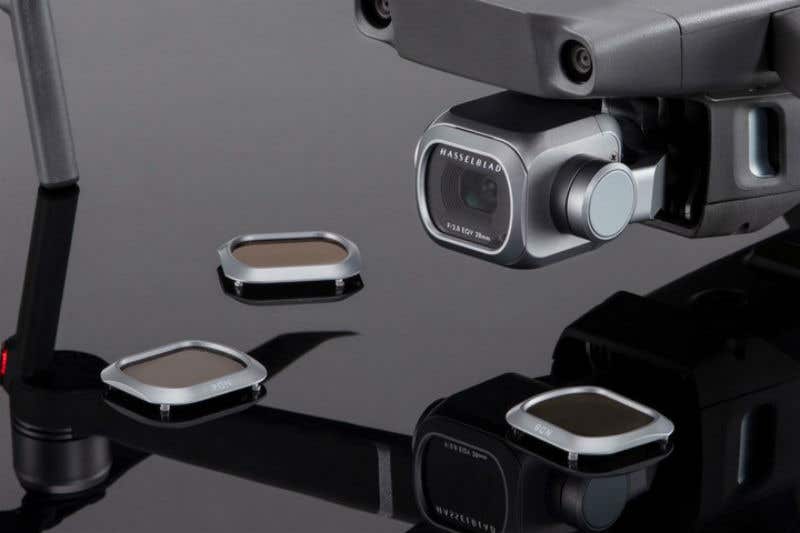
ND filter kits are the most commonly used by drone users, and they are essential for landscape photography lovers of every kind. ND filters restrict the amount of light entering a lens and come in varying strengths for different conditions. The DJI Mini 4 Pro ND Filter Set is a great choice for the Mavic Pro drone and Pro Platinum range, giving you the freedom to create your own unique work by allowing more control of the camera's aperture, exposure time and sensor sensitivity settings.
Camera cleaning kit
As with any piece of camera gear, your drone requires some maintenance and cleaning to keep it performing at its peak for a longer period. For a full breakdown of how to do this properly, see our complete drone cleaning and maintenance guide. A standard cleaning kit like the VSGO Travel Cleaning Kit or the Hahnel Teds 5 in 1 Cleaning Kit features soft cloths, air blowers and similar items that prevent dust and dirt from damaging your drone or its lens and impeding its performance.
Sturdy drone backpack or guard
Your drone gear is precious - so you'll want something to keep all of it safe, secure and easy to access. When choosing the best drone backpack or guard, look for something spacious, with padded dividers that you can customise to suit your kit and needs, and easy to carry. You will also want to choose something that is made from weather-resistant materials, like the Sunnylife DJI Drone Backpack.
Get ready to fly
The best part about drone flying, photography, and filming, is the opportunity to be spontaneous and creative. If you're looking for inspiration on how to put your new kit to use, our guide to aerial drone photography at weddings is a great place to start. Tick these handy accessories off your drone gear list, then you and your drone will be ready for anything.
To learn more, check out our guide to the best drones for photography in Australia, or get in touch with the team at Ted's Cameras today for some expert tips and advice on all the latest drones and equipment.

Best DJI Accessories to Upgrade Your Setup
DJI leads the market in drone technology, and their ecosystem of official accessories is hard to beat. The best DJI accessories are purpose-built to work seamlessly with your drone, ensuring reliability when it matters most. Key picks include the DJI RC Pro controller for extended range and a bright display in direct sunlight, DJI ND Filter Sets for cinematic footage in bright conditions, and DJI Fly More Combos that bundle batteries, a charging hub, and a carry bag at exceptional value. Whether you fly a DJI Mini, Air, or Mavic series, investing in genuine DJI accessories ensures compatibility and performance straight out of the box. Browse the full range at Ted's Cameras.
Essential Camera Drone Accessories for Beginners
If you've recently purchased a camera drone for the first time, a few key accessories will make your early flights safer and more rewarding. A sturdy carrying case keeps your drone and its components protected on the go. ND filters are a beginner-friendly upgrade that reduce overexposure in bright light, giving your footage a smoother, more cinematic look. A landing pad protects your drone's gimbal and camera from dust and debris on take-off and landing. Finally, a spare battery is arguably the single most important accessory for beginners — more flight time means more practice and better shots. Start with these essentials and build your kit as your skills grow.