How to master wide-angle photos & Choose a wide-angle lens

30 July 2023

If you've ever admired a stunning landscape photo or a sweeping architectural shot, chances are a wide-angle lens was probably involved. Wide-angle lenses let photographers capture more of a scene in a single frame, creating eye-catching images that draw viewers in. But if you're new to photography or have yet to use a wide-angle lens, you might need help figuring out where to start.

This all-in-one photography guide will take you through everything you need to know about wide-angle lenses. We'll explain what they are, why they're great for certain types of photography, and some of their limitations. We'll also guide you through different wide-angle focal lengths, answer common questions about these lenses, and help you pick the best wide-angle lens for your camera.

Whether you're just starting in photography or an experienced pro looking to expand your gear, this guide is here to help. So, let's jump in and uncover the world of wide-angle lens photography.


What is a wide-angle lens?

Wide-angle lenses are like having panoramic vision in your camera. They have a shorter focal length - usually 35mm or less - which gives them a wider field of view than a normal lens. In practical terms, you can fit more of the scene in front of you into your frame horizontally, such as capturing a broad landscape or a cityscape, and also vertically, allowing more of the sky or ground into the picture.

But it's not just about fitting more into the frame. Wide-angle lenses also have a deeper depth of field compared to telephoto lenses. A deeper depth of field means that more of your image will be in sharp focus from the foreground elements to the background, creating a captivating sense of depth and scale.

How to master wide-angle photos & Choose a wide-angle lensHow to master wide-angle photos & Choose a wide-angle lens

The benefits of wide-angle photography

How to master wide-angle photos & Choose a wide-angle lensHow to master wide-angle photos & Choose a wide-angle lens

Wide-angle lenses open up a whole new world of photographic possibilities due to their wider-than-average field of view. And while they’re a fantastic option for landscape photographers, just about anyone who wants to capture more of the world in their frame can benefit.

Let's dive into some of the key benefits of wide-angle lenses in more detail:

Expansive field of view

As we’ve already mentioned, the primary benefit of a wide-angle lens is the expansive field of view, which allows you to fit more of the scene in front of your camera into your image. 

Increased depth of field

Unlike telephoto lenses, which tend to have a more shallow depth of field, wide-angle lenses can keep more of your scene in sharp focus from the foreground to the background. This means that whether you're shooting a sprawling landscape or a bustling city scene, you can keep the subjects in the foreground and the background details sharp.

How to master wide-angle photos & Choose a wide-angle lensHow to master wide-angle photos & Choose a wide-angle lens

Emphasis on perspective and scale

Wide-angle lenses can dramatically enhance perspective, making objects closer to the lens appear much larger than those in the background. This can lead to dynamic, eye-catching compositions, especially in wide-angle landscape photography, where you can use this to emphasise the vastness of your surroundings.

Versatility in tight spaces

Wide-angle lenses are perfect for working in tight spaces. Whether you're capturing a small room for a real estate shot or trying to photograph a large group of people in a limited area, a wide-angle lens can be a lifesaver.

With these compelling benefits, it's no surprise that many photographers consider a wide-angle lens an essential part of their camera gear.

The best lens for vlogging

Because they allow you to fit more elements into the shot, wide-angle 35mm lenses are some of the best camera lenses for vlogging. Especially if you are shooting your vlogs selfie-style, you’ll need a lens that’s wide enough to capture you and the scene around you while having the camera at arm’s length on a handheld tripod.

Top tip: For the best vlogging lens, go for a wide-angle zoom lens rather than a prime lens. Wide-angle zoom lenses (15-35mm, or 12-24mm, for example) will give you plenty of versatility and are a great addition to your vlogging camera kit.

How to master wide-angle photos & Choose a wide-angle lensHow to master wide-angle photos & Choose a wide-angle lens

The difference between wide-angle and normal lenses

How to master wide-angle photos & Choose a wide-angle lensHow to master wide-angle photos & Choose a wide-angle lens

To understand wide-angle lenses better, it helps to know how they compare to “normal lenses”. What is the difference between wide angle lenses and normal lenses? The standout difference lies in the field of view.

  • Your average “normal” camera lens typically has a focal length of 35mm to 70mm. As a result, they produce images with a perspective and scale similar to those observed by the human eye. They render images without significant distortion, making them a go-to choice for photographers aiming for a natural, realistic look.

Wide-angle lenses, in contrast, have a shorter focal length, typically less than 35mm, translating to a broader field of view. That makes them ideal for capturing expansive landscapes, architecture, and interior scenes where shots are limited. By capturing more of the scene, they allow you to exaggerate the sense of depth and scale in an image, making nearby objects appear more prominent and distant objects smaller. This can be used creatively to produce dramatic compositions.

Wide-angle focal lengths: What's the difference?

Wide-angle lenses come in various focal lengths, each offering a unique perspective and creating different effects. Here's a brief look at these focal lengths and their specific characteristics:

Standard Wide-Angle Lens: 24-35mm

These lenses provide a balance between an expansive field of view and minimal distortion. You get a broader perspective at these focal lengths than normal, but the effect is still close to how we naturally see the world. This makes them versatile for various genres, from street photography to environmental portraits.

Ultra Wide-Angle Lens: 18-24mm

Ultra wide-angle lenses offer an even greater field of view. This expanded perspective can create dramatic, immersive images, especially when a subject is close to the lens. However, it can also introduce more noticeable distortion, particularly around the edges of the frame. Ultra wide-angle lenses are perfect for landscapes, interiors, and architecture, where the distortion can be used creatively or corrected in post-processing.

Fisheye Lens: 8-16mm

These are a particular type of ultra wide-angle lens, providing an extremely wide field of view that can extend up to 180 degrees, well past the natural field of view of the human eye. Because of this, they produce a distinctive circular image and introduce strong barrel distortion, which can give a surreal, 'fish-eye' view of the world.

How to master wide-angle photos & Choose a wide-angle lensHow to master wide-angle photos & Choose a wide-angle lens

Fisheye lenses are often used for action sports, quirky portraits, or unique perspectives on everyday scenes. However, their use should be carefully considered, as the resulting distortion may not be appropriate or desirable in all circumstances. While this distortion can be creatively inspiring, it's not always suitable for everyday photography. 

Note: The focal lengths mentioned above are for full-frame cameras. If you're using a camera with a smaller sensor, like APS-C or Micro Four-Thirds, the crop factor will effectively increase the lens's focal length. The good news is manufacturers produce wide-angle lenses specifically designed for these formats, so you can still capture those expansive vistas regardless of your camera's sensor size. If you're unfamiliar with terms like 'crop factor,' take a moment to read our digital camera lens buying guide for a better understanding.

By understanding how focal length affects your images, you can better choose a wide-angle lens that suits your creative needs and take full advantage of the wide-angle world.

Selecting the best wide-angle lens

Choosing the best wide-angle lens for your photography hinges on your camera model and the photography style you're passionate about. We've rounded up some of our favourite wide-angle lenses to help guide your choice:

Canon RF 15-35mm f2.8L IS USM

The Canon RF 15-35mm f2.8L IS USM is a versatile wide zoom lens designed for Canon's mirrorless range. It combines a wide field of view with image stabilisation, capturing sharp, clear images, even in low light conditions. It's an excellent choice for professional landscape and architecture photographers.

Nikon Z 24mm f1.8 S

Next up is the Nikon Z 24mm f1.8 S. This prime lens for Nikon's mirrorless Z system offers exceptional sharpness, especially in low light, thanks to its wide f/1.8 aperture. It's a compact, lightweight lens for street photographers and travel enthusiasts.

Sony FE 12-24mm f2.8 GM

Sony users should consider the Sony FE 12-24mm f2.8 GM. This ultra-wide zoom lens offers a broad perspective, a fast autofocus system, and superior image quality. It's ideal for professional landscape, architectural, and interior photography.

Fuji XF 16mm f1.4 R

For Fujifilm users, the Fuji XF 16mm f1.4 R is a wide prime lens with excellent low-light performance and a beautiful, soft bokeh effect. This lens is an outstanding choice for street, landscape, and astrophotography.

Olympus Pro 7-14mm f2.8

Lastly, the Olympus Pro 7-14mm f2.8 is an ultra-wide zoom lens designed for Micro Four Thirds cameras. This lens offers a combination of unrivalled performance, compact size, and excellent sharpness across the entire frame. It's the perfect companion for landscape, interior, and architecture photography.

Every lens we've mentioned brings something unique to the table, so think about the types of shots you want to capture before making your decision.

The limitations of wide-angle photography

Though invaluable in a photography kit, wide-angle lenses have some limitations. Understanding these can help you anticipate challenges and create more engaging images. Let's explore some key aspects you need to be mindful of when using a wide-angle lens:

Ted’s Guide to Going Wide – Choosing a Wide-Angle Lens for Your CameraTed’s Guide to Going Wide – Choosing a Wide-Angle Lens for Your Camera

Image distortion

The main concern with a wide-angle camera lens is distortion. This effect is more noticeable towards the edges of the frame, where objects can appear stretched or warped. For instance, buildings or trees might look like they're leaning outwards. But don't worry; you can use software like Adobe Lightroom or Photoshop to correct this in post-processing.

Composition challenges

With the vast field of view provided by a wide-angle lens, it can sometimes be challenging to compose compelling images. The increased distance between you and your subject may reduce its significance in the frame. To combat this, you may need to get closer to your subject or look for unique angles that add more interest.

Foreground emphasis

A wide-angle lens dramatically increases the amount of foreground in an image. This can create uninteresting images if your foreground lacks notable elements. To overcome this, look for interesting patterns, lines, or textures to guide a viewer’s eye through your photograph.

Not ideal for traditional portraits

Due to the inherent distortion, wide-angle lenses can produce unflattering portraits, stretching features closer to the lens. For this reason, many portrait photographers prefer short-telephoto lenses that provide a more realistic representation. However, there is an emphasis on the word traditional as wide-angle lenses can be used effectively for environmental portraits, where the context of the subject's surroundings is as important as the subject itself.

Despite these challenges, understanding the limitations of wide-angle lenses can turn them into opportunities for unique and creative imagery.


The best applications for wide-angle photography

Knowing the technical benefits of wide-angle lenses is one thing, but understanding their practical applications can give you a real sense of their potential. Here's a deeper look at how these lenses can enhance different types of photography:

Landscape photography

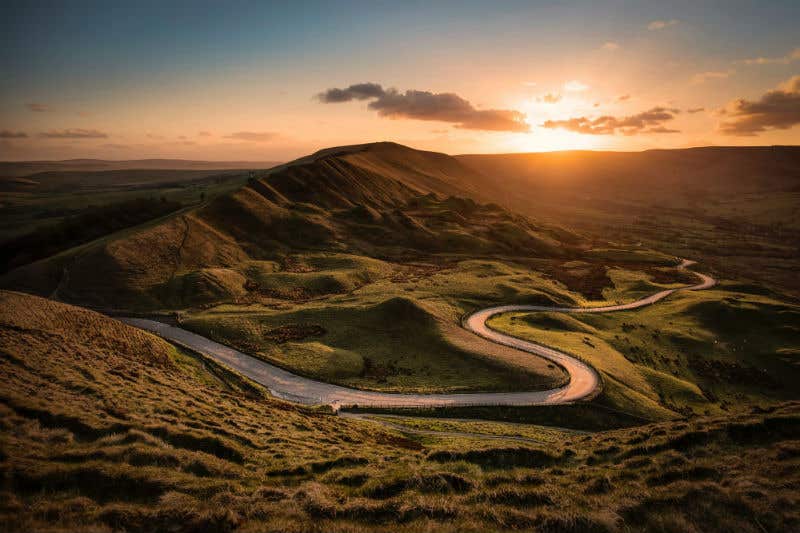
For many, wide-angle lenses are synonymous with landscape photography. Their expansive field of view can capture vast horizons and dramatic skies, while the increased depth of field ensures both near and distant elements remain in focus. The emphasis on perspective can also create dynamic compositions, highlighting prominent features like mountains or trees in the foreground against a vast backdrop.

Street photography

In bustling streets, a wide-angle lens can capture the vibrancy and energy of urban life in a single frame. It allows you to include more context, capturing the interaction of people with their environment. Additionally, the enhanced depth of field keeps subjects both near and far in focus, adding a layer of complexity and interest to your shots.

Architectural photography

Wide-angle lenses are an architect photographer's best friend. They can capture entire buildings or architectural features even when restricted by narrow city streets. Additionally, the distortion that wide-angle lenses can produce often adds a dramatic perspective to architectural forms, accentuating their geometry and design. We wrote a full guide on how to photograph architecture if you’d like to find out more.

Interior photography

In real estate or interior design photography, wide-angle lenses are indispensable. They can capture entire rooms or spaces, showing context and giving viewers a real sense of the layout and design. However, care must be taken to manage the distortion these lenses can produce, especially around the edges of the frame.

In short, wide-angle lenses offer unique opportunities to stretch your creativity across various genres of photography. With a bit of practice, you'll find that they open up a host of new perspectives and styles for your work.


The wide world of wide-angle photography awaits

Stepping into the world of wide-angle photography can be truly transformative, opening up a universe of creative possibilities. The increased field of view, depth of field, and emphasis on the foreground can help you to capture stunning landscapes, sweeping cityscapes, or intimate interior shots.

As with any tool, mastering a wide-angle lens requires practice and understanding its strengths and limitations. But with time, it will become a powerful tool in your photography kit, allowing you to see and present the world from a broader perspective.

If you're ready to explore wide-angle photography or have questions about other lenses or camera gear, the team at Ted's Cameras is always here to help. Until then, continue exploring our blog for more tips, guides, and insights to help you sharpen your photography skills. The wide world of photography awaits you!


FAQs about wide-angle lenses

Q: What is a wide-angle lens used for in photography?
A: Wide-angle lenses are perfect for capturing landscapes, cityscapes, interiors, and architecture. They can fit more of the scene into the frame, making them a favourite tool among travel photographers, real estate professionals, and street photographers.

Q: Are wide-angle lenses good for portraits?
A: Typically, wide-angle lenses are not the first choice for traditional portraits due to the distortion they can cause, especially when the subject is close to the lens. This can make the person's features look exaggerated or distorted. However, a wide-angle lens can be a good choice for environmental portraits where you want to include the surroundings.

Q: What is the difference between wide-angle and fisheye lenses?
A: Both wide-angle and fisheye lenses offer a broader field of view compared to other types of lenses, but the main difference lies in how they render the scene. While wide-angle lenses attempt to maintain straight lines and minimise distortion, fisheye lenses deliberately distort the image to create a spherical "fisheye" effect.

Q: How do I deal with distortion in wide-angle photography?
A: It's important to understand that distortion is a characteristic of wide-angle lenses, especially at the edges of the frame. You can minimise it by being mindful of your composition — try to keep your main subjects away from the edges and keep your camera level to prevent converging lines. Some distortion can be corrected in post-processing using software like Lightroom or Photoshop.

Q: Is a wide-angle lens the same as a zoom lens?
A: Not necessarily. A wide-angle lens is defined by its field of view, while a zoom lens is defined by its ability to change focal lengths. However, you can have wide-angle zoom lenses, like a 16-35mm lens, which offers a range of wide-angle focal lengths.

Q: How does a wide-angle lens affect depth of field?
A: Wide-angle lenses tend to have a greater depth of field compared to telephoto lenses at the same aperture. This means more of the scene will be in focus, from close subjects to distant ones, which is beneficial for landscapes and street photography.

Q: What is a good wide-angle lens for a beginner?
A: The best wide-angle lens for beginners depends on their camera system and what they plan to photograph. However, a versatile and affordable option like a 24mm or 28mm prime lens or an 18-55mm kit lens for a crop sensor camera can be a great starting point.

Q: How do you avoid empty spaces in wide-angle photography?
A: With wide-angle lenses, it's easy to include too much in your frame, resulting in empty or boring spaces. To avoid this, consider using compositional techniques like the rule of thirds or leading lines. You can also move closer to your subject or find exciting elements to include in the foreground.

Q: What's the difference between ultra-wide-angle lenses and regular wide-angle lenses?
A: The difference lies in the field of view. Regular wide-angle lenses typically have a focal length between 24mm and 35mm, offering a broad view without excessive distortion. On the other hand, Ultra-wide angle lenses have focal lengths of less than 24mm and provide an even larger field of view, but they might introduce more noticeable distortion.


Remember, if you have any further questions, the team at Ted's Cameras is always here to assist you. Just drop by one of our stores, or get in touch online. We're always happy to help guide you on your photography journey.


Save $10*

When you subscribe to ClubTed today!

Save $10*

When you subscribe to ClubTed today!